


5 Common Signage Mistakes (And How to Avoid Them)
Investing in new signage is one of the most effective ways to improve your business’s visibility, branding and customer experience. However, even high-quality signs can fail to achieve their purpose if a few common mistakes are overlooked during the planning stage.
Here are five of the most common signage mistakes we see and how you can avoid them.
1. Choosing the Wrong Material
Not every sign is designed for the same environment.
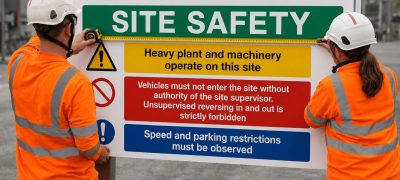
Using lightweight temporary materials for permanent installations can result in damaged signage, while selecting premium materials for short-term projects may add unnecessary cost.
For example:
- Correx is ideal for temporary construction sites and events.
- Foamex offers a professional finish for many indoor and outdoor applications.
- Aluminium Composite (ACM/Dibond) is perfect for long-term external signage where strength and durability are essential.
- Self-adhesive vinyl works well for windows, walls and vehicles.
Choosing the correct material from the outset ensures your signage performs as expected.
2. Making the Sign Too Small
A common mistake is choosing a sign based on available wall space rather than viewing distance.
If customers, drivers or pedestrians can’t read your sign until they’re standing directly in front of it, it isn’t doing its job.
Before ordering, consider:
- How far away people will be viewing it.
- Whether traffic will be moving.
- Whether the sign will be mounted high on a building.
- Any obstacles that could reduce visibility.
Larger signs are often a better investment than replacing signs that simply can’t be seen.
3. Ignoring Branding
Your signage should reinforce your business identity.
Using inconsistent logos, colours or fonts can make your business appear unprofessional and dilute your brand recognition.
Try to keep every sign consistent by using:
- Your current logo
- Brand colours
- Approved fonts
- Consistent messaging
- High-quality graphics
Whether it’s a reception sign or a nationwide site rollout, consistency helps build trust.
4. Skipping a Site Survey
Many installation problems can be avoided with a professional site survey.
Without accurate measurements and an understanding of the installation environment, issues such as incorrect sizing, unsuitable fixing methods or restricted access may only become apparent once production has started.
A site survey can identify:
- Accurate dimensions
- Suitable fixing methods
- Mounting surfaces
- Access requirements
- Lighting considerations
- Potential installation challenges
For larger projects, this can save significant time and cost.
5. Rushing Artwork Approval
Artwork approval is your final opportunity to check everything before production begins.
Once manufacturing has started, correcting mistakes can result in additional costs and delays.
Always check:
- Spelling and grammar
- Contact details
- Website addresses
- QR codes
- Colours
- Dimensions
- Logos
- Product specifications
Taking a few extra minutes during the approval stage can prevent costly reprints later.
Bonus Tip: Think Beyond Today
Many businesses order signage only for their immediate needs.
Instead, consider whether you’ll need additional signs in the future.
Planning ahead can help maintain consistency across multiple locations and make future expansion much easier.
How Custom Signage Direct Can Help
At Custom Signage Direct, we work closely with businesses across the UK to ensure every project is planned correctly from the start.
From design and material selection to site surveys, manufacture and installation, our experienced team can guide you through the entire process, helping you avoid costly mistakes and achieve the best possible result.
Whether you need a single sign or a complete nationwide rollout, we’re here to help.
Need Expert Advice?
If you’re unsure which materials to choose, need help with artwork or would like advice on your next signage project, our friendly team is happy to help.
Contact Custom Signage Direct today for expert guidance and a no-obligation quotation.